Travel Safety Tips: A Complete Guide for a Safe and Stress-Free Trip
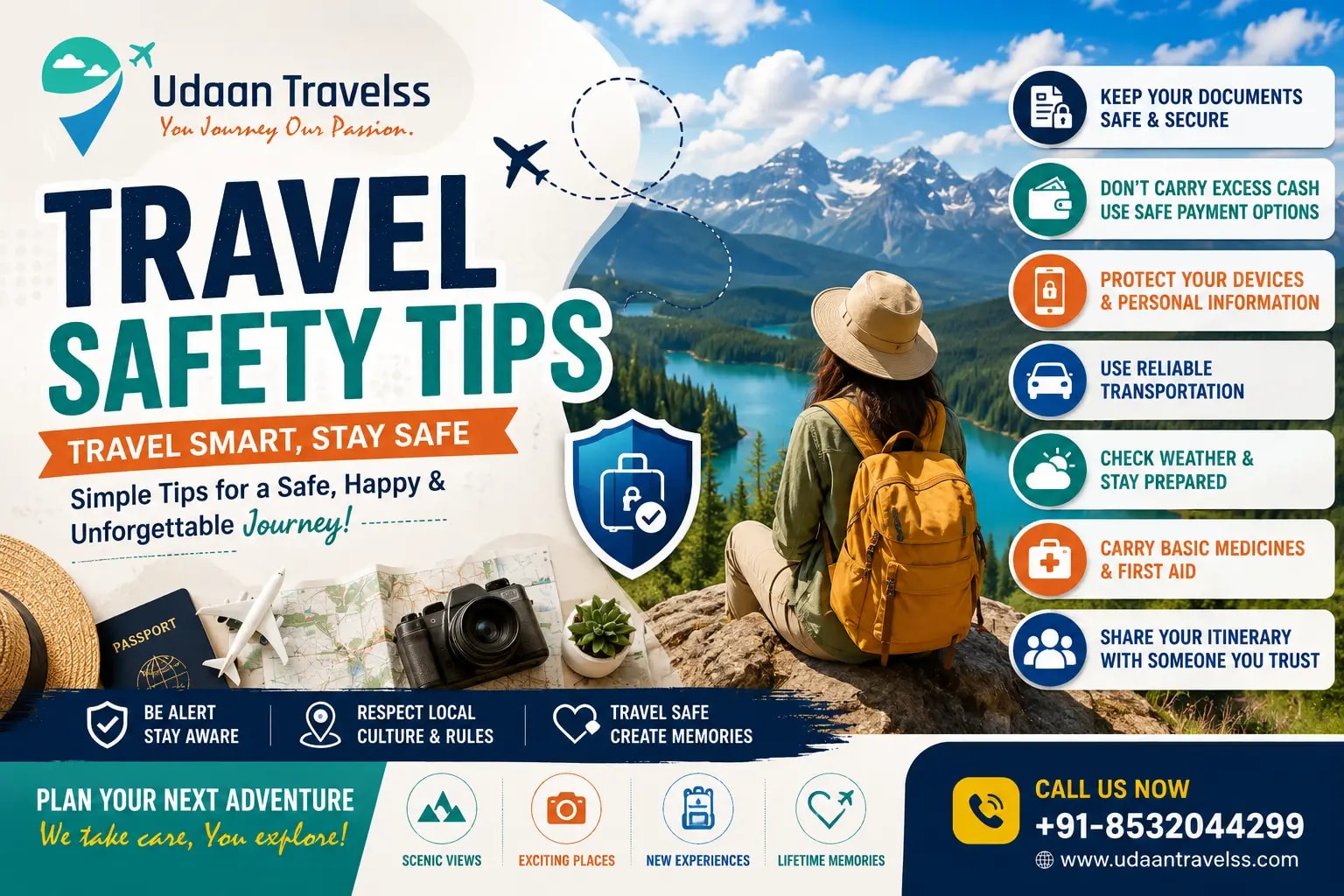
Travel Safety Tips: 20 Essential Tips for a Safe and Stress-Free Trip
Traveling is one of the best ways to take a break from everyday life, discover new places, meet different people, and create memories that stay with you for years.
But while planning a trip, most people focus on where to go, where to stay, what to eat, and what to see. Travel safety is often something they think about only after reaching their destination.
A little preparation before your journey can make a big difference.
Whether you are planning a family vacation, honeymoon, solo trip, road trip, weekend getaway, or an adventure holiday, following a few simple travel safety tips can help you avoid unnecessary problems and enjoy your journey with greater peace of mind.
In this guide, we share 20 practical travel safety tips that every traveler should know before leaving home.
1. Research Your Destination Before You Travel
One of the simplest ways to stay safe is to understand your destination before you arrive.
Research:
- Local weather conditions
- Transportation options
- Popular tourist areas
- Local customs
- Emergency services
- Areas you may want to avoid
- Local laws and regulations
- Common travel scams
For destinations such as Uttarakhand, Kashmir, Kerala, or other areas with changing weather and terrain, checking local conditions before traveling is particularly important.
A few minutes of research can save you from making poor decisions during your trip.
2. Keep Your Important Documents Safe
Your passport, ID, driving license, travel tickets, hotel confirmations, and other important documents should always be protected.
Before leaving, make digital copies of important documents and store them securely.
You can also keep photocopies separately from the originals.
Important documents may include:
- Passport or government ID
- Driving license
- Travel tickets
- Hotel booking details
- Travel insurance documents
- Emergency contact information
Avoid carrying every important document in one place.
3. Don't Carry Too Much Cash
Carrying large amounts of cash can create unnecessary risk.
Take enough cash for situations where digital payments may not work, but use secure payment methods whenever possible.
It's also a good idea to keep your cash in different places rather than putting everything in one wallet.
For example, you can keep a small amount in your wallet and the remaining emergency cash somewhere secure.
4. Protect Your Phone and Other Electronic Devices
Your smartphone is extremely useful while traveling. You may use it for navigation, hotel bookings, digital payments, photography, communication, and emergency calls.
Before your trip:
- Set a strong screen lock.
- Enable device tracking.
- Keep your phone updated.
- Back up important information.
- Avoid connecting to unknown public Wi-Fi networks for sensitive transactions.
- Carry a power bank during long journeys.
Losing your phone while traveling can be more than an inconvenience, so take a few precautions before leaving.
5. Share Your Travel Plans With Someone You Trust
If you're traveling alone or going somewhere remote, let a family member or close friend know your basic travel plans.
Share details such as:
- Destination
- Hotel or accommodation
- Approximate travel schedule
- Transportation details
- Expected return date
You don't need to send constant updates. Simply having someone who knows where you are supposed to be can be extremely helpful if something unexpected happens.
6. Choose Reliable Transportation
Transportation is an important part of travel safety.
Whenever possible, use reputable transportation providers and avoid accepting rides from unknown individuals.
For road trips, check the vehicle condition and make sure the driver is experienced with the local roads.
This is especially important in mountain destinations, where roads can be narrow, steep, or affected by weather.
7. Be Careful on Mountain Roads
If you're traveling to destinations such as Mussoorie, Kedarnath, Badrinath, Kashmir, Himachal Pradesh, or other mountainous regions, road safety deserves extra attention.
Mountain roads can change quickly because of:
- Rain
- Fog
- Snow
- Landslides
- Poor visibility
- Traffic
- Sharp turns
Avoid unnecessary driving during severe weather and always follow local travel advisories.
Don't rush simply because you have a sightseeing schedule.
Safety should always come before reaching the next destination.
8. Check the Weather Before Outdoor Activities
Weather can change quickly, particularly in mountain and coastal regions.
Before leaving for trekking, sightseeing, boating, camping, or other outdoor activities, check the latest weather conditions.
If conditions become unsafe, don't hesitate to change your plans.
A missed sightseeing spot is better than taking an unnecessary risk.
9. Keep Your Valuables Secure
Tourist areas can sometimes be crowded, making it easier for belongings to get misplaced or stolen.
Keep an eye on:
- Wallet
- Phone
- Camera
- Passport
- Jewelry
- Credit/debit cards
Avoid displaying expensive items unnecessarily in crowded areas.
When staying at a hotel, use the available safety facilities where appropriate and avoid leaving valuable belongings unattended.
10. Be Careful With Your Food and Water
Trying local food is one of the best parts of traveling, but food safety is important.
Choose restaurants and food stalls that appear clean and busy.
When you're unsure about the local water supply, choose sealed drinking water.
If you have dietary restrictions or food allergies, communicate them clearly when ordering.
Travel is much more enjoyable when you don't spend half the trip dealing with an upset stomach.
11. Don't Ignore Your Health
Pack basic personal necessities before leaving home.
Depending on your trip, this might include:
- Personal medications
- Basic first-aid supplies
- Sunscreen
- Insect repellent
- Hand sanitizer
- Comfortable walking shoes
- Weather-appropriate clothing
If you take regular medication, carry enough for your trip and keep it properly stored.
12. Take Extra Care During Trekking and Adventure Activities
Adventure activities can be exciting, but they should always be approached responsibly.
Before participating in trekking, rafting, paragliding, camping, skiing, or similar activities:
- Choose a reputable operator.
- Follow the instructor's instructions.
- Use the required safety equipment.
- Check weather conditions.
- Don't ignore physical limitations.
- Never take unnecessary risks for photographs.
A beautiful Instagram photo isn't worth putting yourself in danger.
13. Stay Alert in Crowded Tourist Places
Popular tourist attractions can become extremely crowded during weekends, holidays, and festivals.
Stay aware of your surroundings, especially around:
- Markets
- Bus stations
- Railway stations
- Tourist attractions
- Festivals
- Public transportation
Keep your phone and wallet secure and avoid getting distracted while handling valuables.
14. Don't Share Too Much Personal Information
Be friendly, but maintain reasonable boundaries.
Avoid sharing sensitive information such as:
- Hotel room details
- Travel documents
- Financial information
- Banking passwords
- OTPs
- Personal identification details
Remember that banks, payment providers, and legitimate travel companies should never require you to share your OTP or password with strangers.
15. Be Aware of Common Travel Scams
Tourists can sometimes be targeted by scams because they are unfamiliar with the destination.
Common examples may include:
- Fake booking offers
- Unofficial guides
- Overcharging
- Fake tickets
- Unverified transportation services
- Suspicious payment requests
If an offer seems unusually cheap or someone pressures you to make an immediate payment, take a moment to verify it.
16. Keep Emergency Contacts Handy
Before starting your journey, save important contact numbers in your phone.
Depending on your destination, these may include:
- Local emergency services
- Police
- Hotel reception
- Tour operator
- Family members
- Travel insurance provider
Also keep important numbers written somewhere separately in case your phone is lost or unavailable.
17. Don't Ignore Local Advice
Locals, hotel staff, guides, and authorized authorities often understand the destination better than a traveler does.
If you're told that a particular road, trail, river area, or attraction is temporarily unsafe, take the warning seriously.
Travel plans can always be changed.
Your safety cannot be replaced.
18. Respect Local Culture and Rules
Every destination has its own traditions, customs, and expectations.
When visiting religious or culturally important places:
- Dress appropriately.
- Follow photography rules.
- Respect local customs.
- Follow instructions from authorities.
- Avoid disturbing religious ceremonies.
Being respectful also makes your travel experience more enjoyable and meaningful.
19. Have a Backup Plan
Even the best-planned trip can face unexpected situations.
Your flight may be delayed.
Your vehicle may break down.
The weather may change.
A hotel booking may have an issue.
That's why it's useful to keep a basic backup plan.
Have:
- Emergency money
- Alternative transportation options
- Important documents
- Backup accommodation options when appropriate
- Contact details of your travel provider
Don't let one unexpected problem ruin your entire holiday.
20. Trust Your Instincts
Perhaps the most important travel safety tip is simple:
If something doesn't feel right, step away.
You don't have to accept an invitation, enter an unfamiliar place, use an unknown service, or continue with an activity just because you already planned it.
Your comfort and safety come first.
Travel Safety Checklist Before Leaving Home
Before starting your trip, quickly check the following:
Documents
- ID/passport
- Tickets
- Hotel booking
- Travel insurance documents
- Digital copies of important documents
Money
- Cash
- Cards
- Emergency funds
Technology
- Fully charged phone
- Charger
- Power bank
- Backup of important information
Health
- Personal medications
- First-aid supplies
- Sunscreen
- Necessary personal items
Travel Planning
- Weather checked
- Transportation confirmed
- Accommodation confirmed
- Emergency contacts saved
- Family/friend informed about your itinerary
Travel Safety Tips for Families
Traveling with children requires a little extra preparation.
Keep children close in crowded areas and teach them what to do if they become separated from the family.
You can also keep a small card with your contact information in their bag or pocket.
For family trips, choose accommodation and activities that are suitable for everyone rather than trying to fit too many activities into one day.
A relaxed itinerary is usually safer and more enjoyable than a rushed one.
Travel Safety Tips for Solo Travelers
Solo travel can be incredibly rewarding, but it also requires greater awareness.
If you're traveling alone:
- Keep someone informed about your itinerary.
- Avoid isolated areas after dark.
- Choose reputable accommodation.
- Keep your phone charged.
- Avoid sharing too much information with strangers.
- Trust your instincts.
- Keep emergency contacts accessible.
Most importantly, don't let the excitement of exploring a new destination make you ignore basic safety.
Travel Safety Tips for Road Trips
Road trips offer freedom and flexibility, but preparation is important.
Before starting:
- Check your vehicle.
- Check tires and brakes.
- Carry a first-aid kit.
- Keep drinking water available.
- Carry a power bank.
- Check the route and weather.
- Take regular breaks.
- Avoid driving when tired.
- Follow local speed limits.
For mountain road trips, allow extra time rather than trying to reach your destination quickly.
Final Thoughts
Travel should be about exploring, relaxing, learning, and creating memories—not worrying about what might go wrong.
The good news is that travel safety doesn't require complicated planning. Simple habits such as protecting your documents, choosing reliable transportation, checking the weather, securing your valuables, staying aware of your surroundings, and keeping someone informed about your plans can make a big difference.
Whether you're heading to Mussoorie for a weekend getaway, exploring Uttarakhand, going on a Char Dham Yatra, enjoying a Kashmir holiday, or planning a Kerala vacation, take a few minutes to prepare before you leave.
Travel smart, stay alert, respect the destination, and enjoy the journey.
Plan Your Next Journey With Udaan Travelss
Planning a holiday but don't want to manage every detail yourself?
Udaan Travels can help you plan memorable journeys across Uttarakhand, Kashmir, Kerala, and other popular destinations in India.
From Mussoorie and Dehradun tour packages to Char Dham Yatra, Do Dham Yatra, Kashmir tours, and Kerala holidays, you can choose a package according to your travel requirements, schedule, and budget.
Your journey should be exciting from the moment you start planning—not just when you reach your destination.
Ready for your next adventure?
Contact Udaan Travelss and start planning your next trip today.